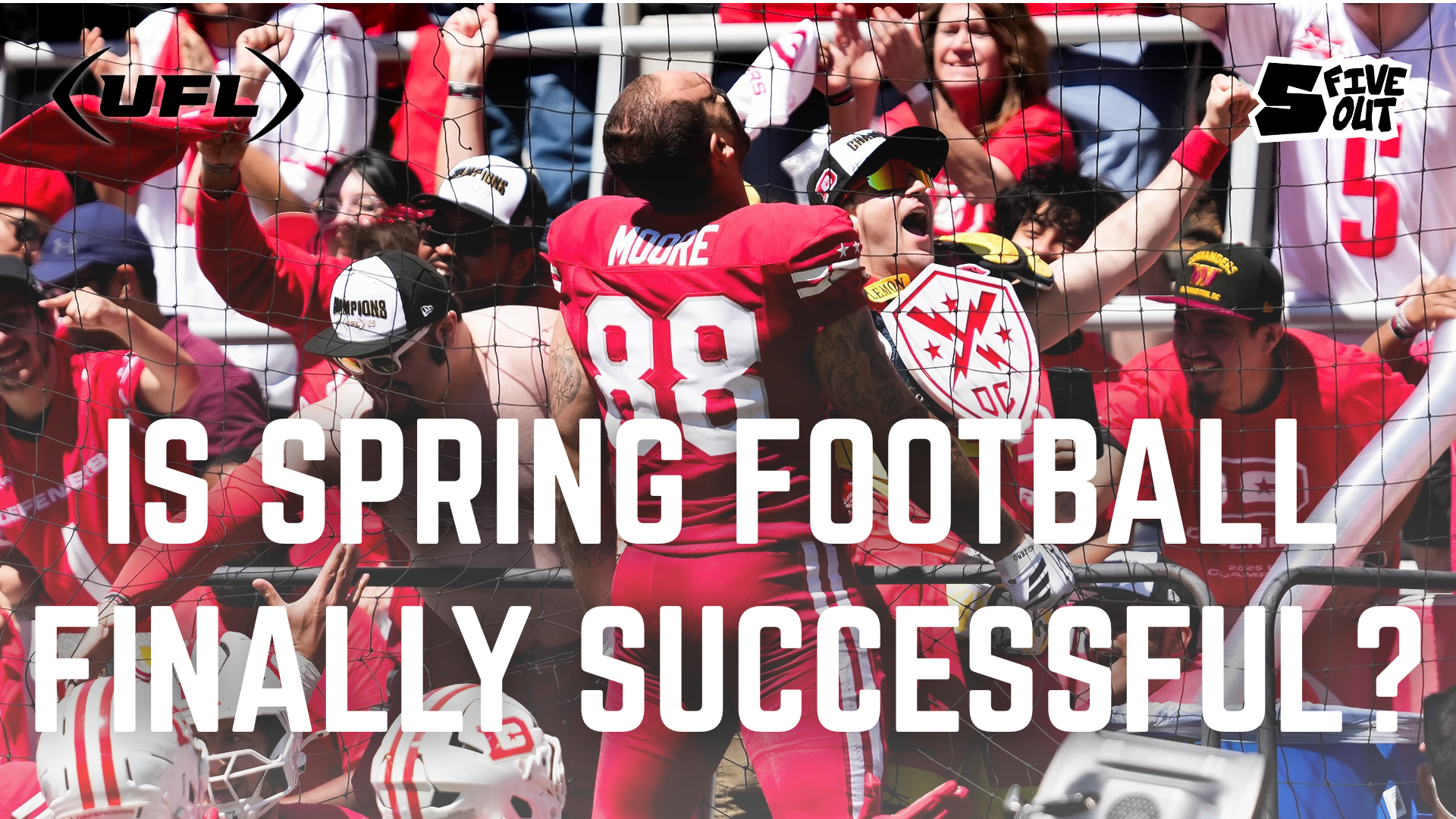
The United Football League (UFL) has been a long project that many different commissioners have tried to figure out for years. The UFL’s season is held in the spring, or the offseason of the NFL. The season is just ten weeks long and gives players a chance to showcase their skills for a shot at the NFL. Most of the players in the UFL have been on an NFL roster or have been invited to training camp to earn a spot. The idea of spring football has always been a topic of discussion and the main question is: has this idea of spring football finally working? This season could prove to be a successful season for the UFL, turning the league into a gridiron pipeline.
Many different owners and commissioners have come to together throughout the past 50 years to create a professional football league that could compete with the NFL. As good as the idea sounds, many of these leagues have proven to be unsuccessful, but is the latest version of the league the best we have seen?
In this article, I am going to break down the past of UFL and what separates this edition of the UFL from past spring football leagues. Then, I am going to determine whether this league is becoming a true gridiron pipeline.
*Research is coming from Football Stadium Digest and Wikipedia.
The Graveyard of Spring Leagues
There have been many different spring football leagues and the first one was established in 1971. The Trans-American Football League was the first league to have a spring schedule, and it was a total disaster. However, even after this league’s failure, many people still believed in the idea of spring football. They believed a league could compete with the NFL, instead of becoming a gridiron pipeline for the league.
In the 1980s, the most popular spring football league was created by David Dixon, named the “United States Football League”. The USFL launched in 1983, and this was the first time that a professional football league had agreed to a broadcast deal with a cable network. The National Football League, or the NFL, did not sign its first broadcast deal until 1987. The USFL was becoming increasingly popular, and their two-year broadcasting deal spoke volumes about where they stood in relation to the NFL.
The USFL didn’t just have the broadcast deal; they had legitimate talent. Stars like Doug Flutie, Herschel Walker, and Steve Young played during the league’s short life. The league averaged over 25,000 attendees in the first season, making it the most popular season of spring football ever. Even though it was going great in the spring, they were not just trying to have the best spring football league, they were coming after the NFL as the most popular professional football league in the world.
This would ultimately fail. In 1985, the USFL would move from a spring schedule to a fall schedule, directly competing with the NFL. However, this failed, and it spelled the end of the USFL. Since then, no league has been able to replicate those numbers. The main reason for the failure is because these leagues were trying to compete against the NFL, instead of becoming a gridiron pipeline.
The XFL and the USFL were the most recent leagues to be created. This would lead to the merger of today’s most popular spring football league: The United Football League.
Stability by Design: The Merger Era
Before the merger of the XFL and USFL, these leagues had been struggling for quite some time. The XFL had struggled through three different ownerships, but then in 2023, they started to see some success. The USFL was doing the same, and these two leagues were going to be competing against each other during the spring season, potentially overlapping scheduled games.
However, these two leagues decided the best course of action was to complete a merger and become the UFL. This made sense for both leagues, seeing that both leagues were showing some success and the merger could help them become bigger than spring football has ever been. In 2024, they would become the UFL for the first time, and instead of competing with the NFL, they provide a stable alternative.
The structure is simple: eight teams in locations that do not have NFL teams (except Houston), and they are going to expand to different areas without NFL teams. The layout is great, hitting areas without professional football teams, and this isn’t just an idea. The league is backed by Fox and ESPN, as well as the main contributor to the league, Dwayne “The Rock” Johnson.
When you look at the rosters and the talent, it feels like a step down from the NFL. Many players were cut or undrafted from the NFL or the NFL Draft. Some players have the opportunity and talent to sign to an NFL roster, but these players have chosen to receive playing time and lead a team.
The question remains: is the UFL finally becoming a gridiron pipeline to the NFL, rather than challenging the league?
From “Plan B” to NFL Pipeline
I believe the answer to that question is yes. Instead of competing with the NFL and trying to sell fans on the idea of spring football as an alternative to the NFL schedule, the UFL is leveraging its schedule to help its players. Following their 2025 season, they showed this league can stay successful and profitable because players are willing to play for a chance at the NFL.
Following the 2025 season, over 50 players signed NFL contracts and hundreds of workouts were held for UFL players. The league is not owned or partnered with the NFL, but it seems like there can be a relationship between the two leagues in the future. The UFL is showing they are a gridiron pipeline to the NFL, and that may be the best course of action for spring football.
Even thought the base salary is lower in the UFL, players are given an opportunity to play on Fox and ESPN every week to prove that they deserve a spot in the NFL. Sometimes, players just need an opportunity to play, and the UFL is providing that. Spring football leagues have tried to compete with the NFL, instead of helping the NFL and the UFL is proving you can be profitable while helping players reach the NFL.
*If you love our football content, check out Five Out NFL content!